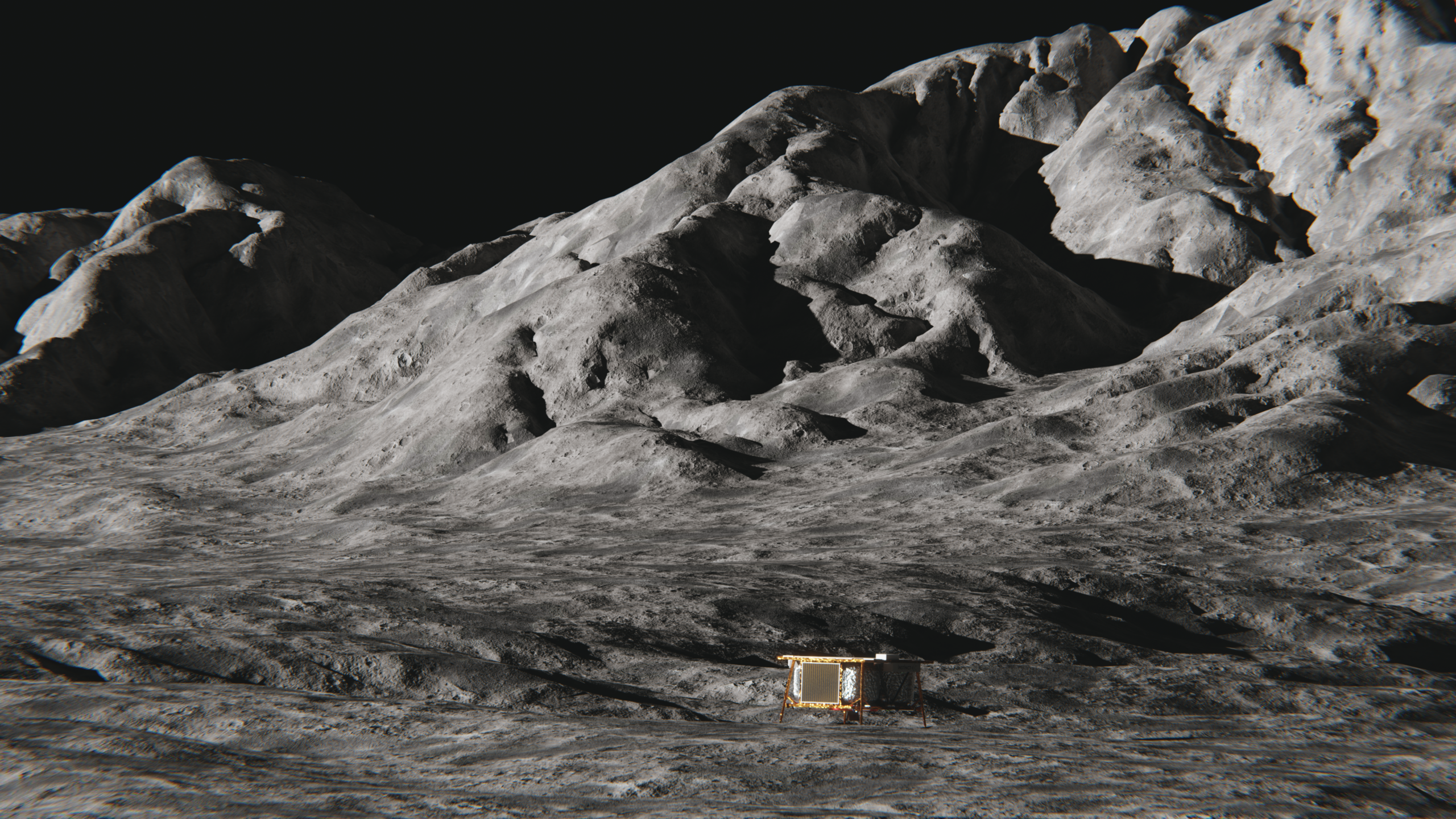
Instinct Space is shifting its ambitions from orbit to the lunar surface, marking a decisive pivot from navigation infrastructure to direct lunar delivery services. The London-based startup, which joined Y Combinator in 2025 with an original focus on building a lunar-orbit GPS-like constellation, is now redirecting its efforts toward developing compact, low-cost lunar landers capable of reaching the Moon from low Earth orbit.
According to CEO Alex Piñel Neparidze, the change in direction came directly from the challenges the team encountered while exploring orbital infrastructure. “We explored the idea of building a small GPS-like constellation around the Moon, and it was precisely that experience that led us to work on lunar landers,” he told Payload. “We found that securing a launch was very expensive and difficult, and all potential customers are effectively stuck down here on Earth for the same reason. So, we pivoted to tackle the bigger problem.”
A different path to the lunar surface
Traditional lunar missions typically depend on expensive, dedicated launches that send spacecraft directly toward the Moon. Instinct Space is instead proposing a more flexible—and potentially cheaper—approach: launching small landers into low Earth orbit using shared rides, then sending them onward to the Moon from there.
The company’s strategy is built around reducing per-mission costs by increasing flight frequency and minimizing reliance on bespoke lunar launch windows. In theory, this model could make lunar access more routine and accessible to a wider range of customers.
Instinct’s first mission is currently scheduled for late 2028. The company plans to send a dishwasher-sized lander carrying up to 20 kilograms of payload to the lunar surface at an estimated cost of around $550,000 per kilogram.
Engineering a small but capable lunar vehicle
When fully fueled, the lander is expected to weigh approximately 650 kilograms. Its propulsion system will rely on an electric pump-fed engine paired with four attitude control thrusters, using a combination of hydrogen peroxide and kerosene as propellants.
This configuration is designed to deliver around 6 km/s of delta-v—sufficient to transfer payloads from low Earth orbit to lunar trajectory and perform the final landing sequence on the Moon’s surface.
The system is intended to be launcher-agnostic, allowing it to hitch rides on multiple launch providers. Once deployed, missions are expected to take roughly four months to reach lunar orbit.
On the surface, the lander is designed to operate for a full lunar day—about 14 Earth days—before its systems are expected to shut down due to environmental conditions.
“You can think of it as a kind of kick-stage OTV with legs,” said Piñel Neparidze. “At the end of the day, I suppose it’s also less risky to launch 10 smaller missions at the cost of one bigger mission.”
Early demand and commercial signals
Although still in the development phase, Instinct Space is already beginning to see early commercial interest. The company has raised approximately $1.2 million during its time at Y Combinator, which is being used to test propulsion and navigation systems for its future lander.
In May, the startup signed an agreement with Polimak Space, a Luxembourg-based company developing lunar in-situ resource utilization (ISRU) technologies, to evaluate the possibility of delivering a regolith-handling payload on future missions.
The broader bet behind Instinct’s strategy is that demand for lunar access will expand rapidly if costs can be driven down. By offering a lower-cost entry point, the company hopes to attract both government-backed and international commercial payload customers.
“We would love to take part in all these American plans to go to the Moon,” Piñel Neparidze said. “There was also, from what we found, a lot of interest abroad…all these countries that do not have access to CLPS are looking for a lander to get them up there, so we’re really eyeing both sides of the Atlantic.”