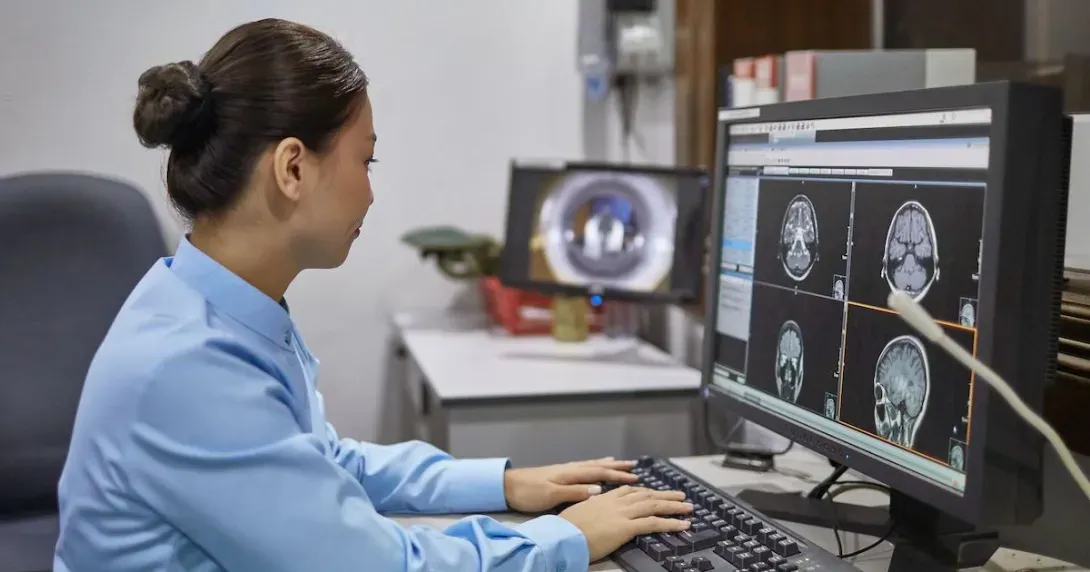
As healthcare organizations grapple with increasingly sophisticated cyberattacks and persistent staffing shortages, technology providers are accelerating the rollout of AI-powered solutions designed to strengthen security, improve efficiency, and reduce administrative burdens. The medical imaging sector is becoming a major testing ground for these innovations, with new tools targeting everything from ransomware threats to radiology reporting workflows.
AI-powered protection against malware hidden in medical images
Medical imaging systems have become an attractive target for cybercriminals, particularly as threat actors begin incorporating artificial intelligence into their attack strategies. Imaging files—including X-rays, CT scans, PET scans, MRIs, and ultrasounds—are often exchanged through Picture Archiving and Communication Systems (PACS), making them a critical part of healthcare infrastructure and a potential attack surface.
Recent incidents have highlighted the risks. According to cybersecurity company Varist, healthcare organizations continue to face increasingly complex threats, including attacks that leverage medical imaging data as a means of extortion.
To address these vulnerabilities, the Reykjavik-based company has introduced a new security platform called Hybrid Detection Engine. The technology is designed to protect DICOM files—the standard format used for medical imaging—by detecting attempts to manipulate image files and inject malware into healthcare systems.
Unlike traditional security approaches that rely heavily on known threat signatures, Varist’s platform combines comprehensive file scanning with predictive analysis. The system examines all file sizes, including embedded image data, while simulating suspicious behaviors and assigning risk scores to identify potentially malicious content.
The company says the platform is capable of processing up to 500 billion file scans per day while maintaining a low false-positive rate. More importantly, it aims to identify previously unknown or “zero-day” exploits before they appear in conventional threat databases.
“A picture is worth a thousand words, especially when lives depend on it, and threat actors may be looking to use that to their advantage,” said Siggi Petursson. He noted that the system is specifically designed to detect emerging threats that can evade traditional cybersecurity defenses without disrupting patient care or compromising privacy.
Another key advantage is local deployment. Healthcare organizations can scan and analyze files within their own environments, avoiding the need to upload sensitive information to public cloud services and helping maintain compliance with privacy regulations and cyber-insurance requirements.
Ambient AI enters radiology reporting
While cybersecurity remains a growing concern, radiology departments are facing a different challenge: rising imaging volumes combined with an ongoing shortage of qualified radiologists.
To help address those pressures, Mosaic Clinical Technologies has launched a cloud-based radiology platform that incorporates ambient AI to automate report creation and streamline interpretation workflows.
The platform, known as MosaicOS + Mosaic Reporting, uses real-time AI assistance to generate structured radiology reports as clinicians review imaging studies. The goal is to reduce reliance on fragmented software tools while creating a more unified environment for reporting and workflow management.
Built on the company’s Cognita Imaging foundation model, the platform allows radiologists to organize findings, generate structured documentation, and make targeted edits through voice-driven controls and real-time reporting features.
“Radiology is facing a chronic shortage of radiologists as imaging volumes continue to climb,” said Mike Peresie. He noted that growing backlogs and mounting turnaround-time pressures are creating significant operational challenges across healthcare systems.
According to the company, the technology is intended to expand reading capacity, shorten report turnaround times, and help providers meet service expectations from both physicians and patients.
Nina Kottler added that the platform offers health systems an opportunity to increase efficiency while establishing a flexible infrastructure capable of adapting to future AI advancements.
AI-generated reports move into large-scale deployment
Another major player pushing automation in radiology is DeepHealth, the health informatics and AI division of RadNet.
The company recently announced the commercial availability of Reporting Pro, an AI-powered reporting platform that integrates clinical findings from FDA-cleared third-party diagnostic imaging tools directly into radiology workflows.
Originally introduced last year, the platform is now moving into broader deployment, with initial customer implementations scheduled to go live over the coming quarter.
The timing reflects a growing workforce challenge. DeepHealth estimates that demand for imaging services will continue to outpace radiologist capacity in the United States, with workforce shortages projected to reach approximately 15% by 2029.
Rather than replacing radiologists, the system is designed to reduce the documentation burden that often consumes valuable clinical time. When a physician opens a case, the platform automatically generates a preliminary structured report populated with relevant findings, allowing the radiologist to focus on review, interpretation, and refinement.
“Radiology is entering a new era where AI supports the diagnostic journey,” said Madhu Jahagirdar.
The company says this connected reporting environment significantly reduces time spent on repetitive documentation tasks while improving workflow consistency. Faster reporting, in turn, can accelerate treatment decisions by delivering imaging results more quickly to referring physicians and patients.
According to Jason Sinner, reducing reporting times can have a direct impact on patient care, helping clinicians receive critical diagnostic information sooner and make more timely treatment decisions.
Together, these developments illustrate how AI is rapidly reshaping medical imaging—not only by strengthening cybersecurity defenses but also by helping healthcare organizations manage growing workloads, improve operational efficiency, and support faster, more informed clinical decision-making.